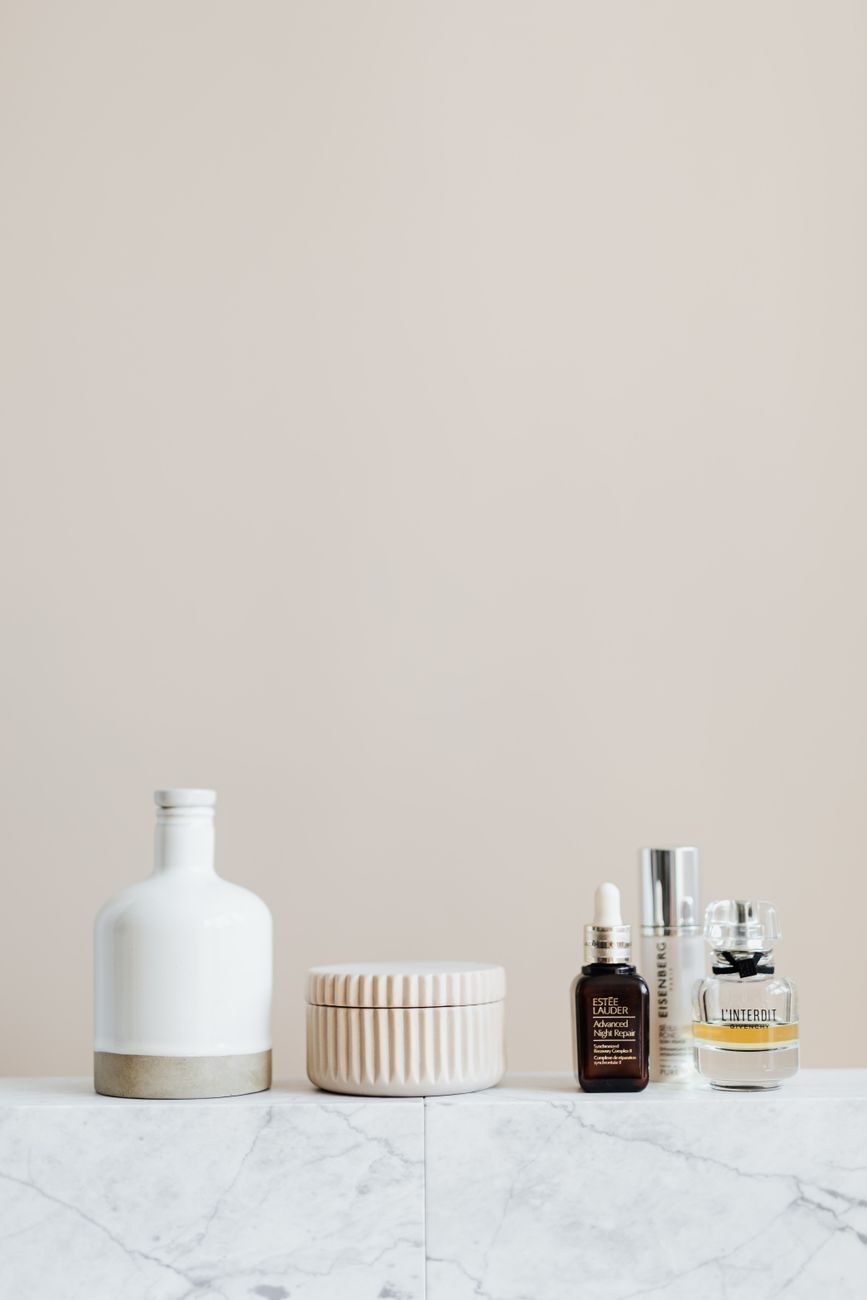
Tata Harper’s Repairative Moisturizer costs $118 for 50mL. CeraVe’s Moisturizing Cream costs roughly $11-16 for 16oz (about 473mL). On a per-ounce basis, that’s not a small gap — it’s closer to a 40x difference. The question this piece asks is not “which one is nicer” but “what does each ingredient panel actually claim to do, and does the price difference track a real difference in function.” The honest answer, worked through below, is more interesting than either “expensive is always better” or “it’s all the same, buy the cheap one.”
What a moisturizer actually needs to do
Every functional moisturizer needs three categories of ingredient, regardless of price:
- Humectants pull water into the skin’s outer layer. Hyaluronic acid (often listed as sodium hyaluronate) and glycerin are the two most common and best-studied.
- Emollients soften and smooth by filling gaps between skin cells. Plant oils, butters (shea, mango seed), and fatty esters do this job.
- Occlusives form a layer that slows water loss. Petrolatum and dimethicone are the strongest options; heavier plant butters do a lighter version of the same job.
A well-built moisturizer needs at least one ingredient from each category. Everything past that — “superfood” antioxidant blends, peptide complexes, botanical-tech serum actives — is additive, not foundational. The foundational three categories are where the real functional comparison happens.
Reading the two formulas side by side
Tata Harper Repairative Moisturizer ($118, 50mL): sodium hyaluronate for humectant function; mango seed butter, safflower oleosomes, shea butter ethyl esters, and jojoba seed oil for emollient and light-occlusive function. The brand states “22 sources of plumping hydration, 4 sources to minimize the look of wrinkles.” All-natural-origin formulation is a stated constraint — meaning every ingredient is sourced from a natural rather than synthetic pathway, which is a genuine formulation commitment and a genuine cost driver, independent of whether it changes efficacy.
CeraVe Moisturizing Cream ($11-16, 16oz): sodium hyaluronate for humectant function; three named ceramides (NP, AP, EOP) plus cholesterol and phytosphingosine for barrier-support function; petrolatum and dimethicone for strong occlusive function; MVE (MultiVesicular Emulsion) delivery technology for sustained release over 24 hours. Developed with dermatologists, fragrance-free, non-comedogenic.
Both formulas check all three functional boxes. CeraVe’s occlusive layer (petrolatum, dimethicone) is measurably stronger than Tata Harper’s (plant butters and esters alone), which matters more for very dry or compromised skin barriers. Tata Harper’s all-natural-origin sourcing and inclusion of the three-ceramide-adjacent Elixir Vitae line ingredients target a different priority — ingredient philosophy and sensory experience over maximum occlusive strength.
Three moisturizers, three tiers
Three named ceramides, hyaluronic acid, and MVE delivery technology, developed with dermatologists — this is not a stripped-down formula despite the price. The trade-off is fragrance-free simplicity and a thicker, more traditional cream texture rather than the whipped, fast-absorbing textures common at higher price points. For pure barrier-repair function, this is a legitimate daily driver, not a placeholder until you can afford better.
Three weights of hyaluronic acid, squalane, and an antioxidant-forward ingredient set (kale, spinach, green tea) built into a lightweight, fast-absorbing gel-cream texture. The mid tier here is solving a specific problem the entry tier doesn’t prioritize: texture and layering under makeup or SPF, for normal-to-oily and combination skin. It is not meaningfully stronger on barrier repair than CeraVe — it’s a different skin type and sensory target.
The case for the heirloom tier is the all-natural-origin sourcing constraint and a fuller emollient profile (mango seed butter, jojoba, safflower oleosomes) built for drier or more mature skin that wants richer texture and plant-based actives specifically, not just the cheapest route to the same barrier result. It is a legitimate premium formula with full ingredient transparency — but it is a preference and philosophy purchase relative to CeraVe, not a strictly stronger one on barrier function alone.
The comparison table
| CeraVe (entry) | Youth To The People (mid) | Tata Harper (heirloom) | |
|---|---|---|---|
| Price | $11-16 / 16oz | $46-49 / 2oz | $118 / 50mL (~1.7oz) |
| Price per oz | ~$0.75-1.00 | ~$23-25 | ~$69 |
| Humectant | Hyaluronic acid | 3-weight hyaluronic acid | Sodium hyaluronate |
| Occlusive strength | Strong (petrolatum, dimethicone) | Light (squalane) | Light-moderate (plant butters/esters) |
| Formulation philosophy | Synthetic, dermatologist-developed | Antioxidant-forward, vegan | All-natural-origin |
| Best fit | Very dry skin, budget-conscious, fragrance-sensitive | Normal-oily/combination, daytime/under makeup | Dry-mature skin, natural-origin priority |
The price gap tracks formulation philosophy and ingredient sourcing far more than it tracks basic barrier-repair function. If barrier repair alone is the goal, the entry tier is not a compromise. If natural-origin sourcing or a specific sensory experience matters to you, that’s a real and legitimate reason to pay more — it’s just a different thing being purchased.
Frequently asked questions
Is Tata Harper’s Repairative Moisturizer worth $118? On ingredient transparency and formulation quality, yes relative to its clean-beauty peer set — the shea butter, jojoba, and hyaluronic acid combination is a legitimately well-built barrier-repair formula, and Tata Harper publishes full INCI lists without hiding behind “proprietary blend” language. Whether it’s worth it to you depends on whether you value the all-natural-origin formulation constraint, which does add cost versus a synthetic-ingredient equivalent doing a comparable job.
What ingredients actually matter in a moisturizer, regardless of price? Three functional categories: humectants that pull in water (hyaluronic acid / sodium hyaluronate, glycerin), emollients that soften and smooth (shea butter, plant oils, fatty esters), and occlusives that seal moisture in (petrolatum, dimethicone, or heavier butters). A well-built moisturizer needs at least one from each category. Marketing terms like “superfood” or “botanic-tech” are packaging on top of this basic structure, not a replacement for it.
Is a $14 drugstore moisturizer actually as good as a $100+ one? For pure barrier function, frequently yes. CeraVe’s ceramide-and-hyaluronic-acid formulas are dermatologist-developed and use MVE delivery technology for sustained release, and multiple dermatology-review sources rate them equivalently to prestige alternatives for basic moisture-barrier repair. The prestige tier tends to differentiate on ingredient sourcing (natural origin, sustainability), texture and sensory experience, and additional actives (peptides, specific antioxidants) — not on whether the moisturizer moisturizes.
How do I know if a “clean beauty” claim is meaningful or just marketing? Check whether the brand publishes a full ingredient list with plain-language naming (not “and other botanical extracts”), whether claims like “PFAS-free” or “sulfate-free” come with third-party testing or certification rather than just a label, and whether the brand explains why an ingredient was excluded rather than just that it was excluded. Tata Harper and Youth To The People both publish full INCI lists, which is the baseline test.
Should a moisturizer routine change with the seasons? Generally yes for climate-exposed skin — a lighter gel-cream (like an Air-Whip formula) in humid summer months, a heavier occlusive-forward cream in dry winter months. The active ingredients (ceramides, hyaluronic acid) can stay constant across seasons; what should change is the emollient-to-occlusive ratio, which is largely a texture and climate-matching decision rather than an ingredient-quality one.
Read next
- The case against more — the editorial position behind the three-tier framework used here.
- The Arhaus sectional question — the same cost-per-year argument, applied to furniture.
- Disclosure and editorial standards — the full economic disclosure.