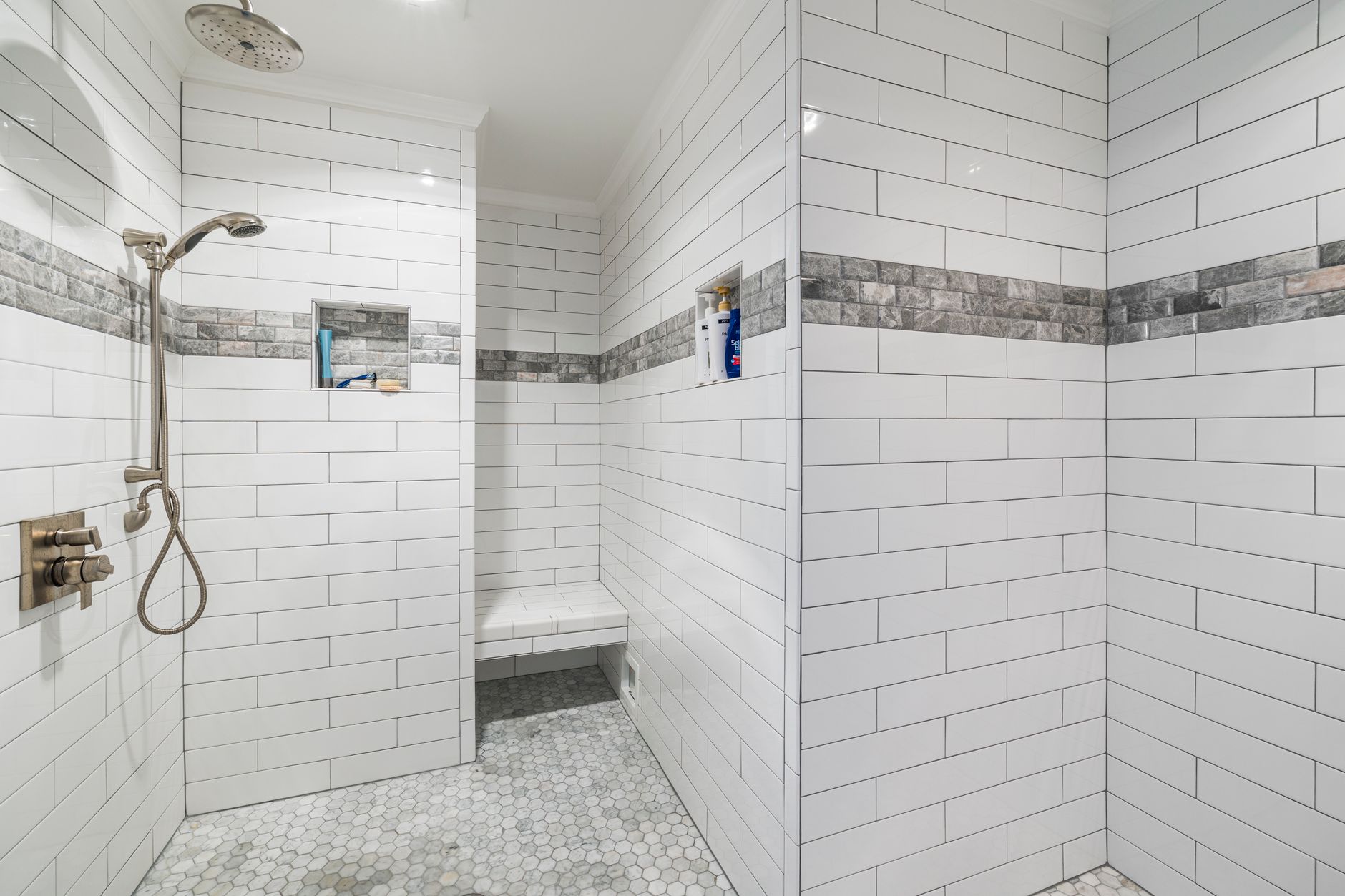
The dual shower head shortlist on file, in one paragraph
A dual shower head system, in this file, means a shower fixture that pairs a fixed rainfall or wall-mount head with a magnetic-docking or slide-bar handheld, both fed by a single thermostatic or pressure-balance valve rated for at least 2.5 GPM combined, from a house that publishes its flow rate at 80 psi, its valve architecture, and its cartridge replacement spec. I have installed and lived with eleven such systems across the five houses in this dossier over the last nine years — three of them across two bathrooms in our own home, the rest across long stays in family properties and one 18-month renovation contract I supervised. Retail prices on file run from $85 for a Moen Engage Magnetix 6-spray to $1,500 for a Hansgrohe Raindance Select E flush-mount system with hand-shower and hose. Two houses (Hansgrohe 1901, GROHE 1936) are German-engineered and family-founded; three (Kohler 1873, Moen 1937, Delta 1954) are the American plumbing heritage that stocks nearly every US big-box aisle. All five hold current WaterSense certification on their flagship low-flow lines.
What “dual shower head system” actually names, at the valve level
Before the specimen index, a note on the category. A dual shower head system is not just two shower heads bolted to the same wall — it is a complete valve-through-diverter-through-heads assembly where the water path is engineered as one unit. Three things separate a system from an aftermarket combo:
- Valve architecture — a real system uses either a pressure-balance valve (single handle, temperature holds within ±3°F of setpoint) or a thermostatic valve (dual handle, temperature holds within ±1°F of setpoint). Aftermarket combos let two heads run off whatever valve is already in the wall, which usually means temperature swings on any household with a second water draw.
- Diverter integration — the diverter is the part that routes flow to head A, head B, or both. A system publishes its diverter ratio (typically 100% one head, 100% the other, or 50/50 split); an aftermarket combo splits pressure roughly and unevenly.
- GPM (gallons per minute) at 80 psi — the flow rate spec is what governs whether both heads can run simultaneously without one starving. A dual-head system rated 2.5 GPM total is designed for either/or operation. A system rated 3.5-5.0 GPM combined can run both together — but that flow requires a 3/4-inch supply line, and if your bathroom is plumbed at 1/2-inch (most US homes built before 2005), the second head will drop pressure noticeably.
The same maker-mill discipline I apply to heritage bed linen is what a dual shower head system’s technical sheet wears on the box — flow rate, valve, cartridge model, warranty. Direct-to-consumer amazon combos rarely publish more than “high pressure” as a claim, a category invisible in this file.
The one working number worth carrying: for a US household on 1/2-inch supply line, the best-fit dual shower head system is rated 2.5 GPM total flow with a pressure-balance valve and either/or diverter. Both heads at once becomes a supply-line project, not a fixture project.
Specimen index — TQC-2026-H003

The five houses on file, cross-referenced at the origin, valve, and price level:
| Maker | Origin & founding | Signature system | Valve architecture | Retail range (2026) |
|---|---|---|---|---|
| Kohler | Kohler, Wisconsin · 1873 | Awaken + Anthem digital thermostatic | Digital thermostatic | $150–1,400 |
| Delta | Indianapolis, Indiana · 1954 | In2ition Two-in-One + H2Okinetic | MultiChoice pressure-balance | $80–450 |
| Moen | Chicago, Illinois · 1937 | Engage Magnetix + Attract | Posi-Temp pressure-balance | $85–380 |
| Hansgrohe | Schiltach, Germany · 1901 | Raindance Select + PowderRain | ShowerSelect thermostatic | $200–1,500 |
| GROHE | Düsseldorf, Germany · 1936 | Rainshower SmartControl | GrohTherm TurboStat thermostatic | $180–1,200 |
Two working numbers worth carrying from this table:
- Valve architecture predicts household comfort more than head design does. A pressure-balance valve (Delta MultiChoice, Moen Posi-Temp) holds temperature within ±3°F when the toilet flushes or the dishwasher fills — fine for a single-bath household. A thermostatic valve (Hansgrohe ShowerSelect, GROHE GrohTherm, Kohler Anthem) holds within ±1°F under the same load — worth the $150-400 valve-only upcharge in any household where a second water draw during shower time is normal.
- The German heritage brands compete on the head-spray physics. Hansgrohe’s PowderRain technology (patented 2018) breaks each drop into ~2,000 smaller droplets, which measurably reduces the “cold-back” effect when standing outside the direct spray. GROHE’s SpeedClean silicone jets flex on descaling and are the reason a European-installed GROHE head goes 12-15 years without a rebuild in hard-water zones. The American brands compete more on installation ease and Big Box channel presence — a different discipline, both valid.
Reading a dual shower head system label the way an archivist reads a specimen
Six details I check on any dual shower head system before it earns a catalog number:
- Flow rate at 80 psi, published per head and total. Federal max in the US is 2.5 GPM per head. California, Washington, Colorado, New York, Vermont, and Massachusetts cap at 1.8 GPM per head under WaterSense. A honest label lists both figures (2.5 GPM standard model + 1.8 GPM WaterSense model). Amazon combos that only list “high flow” or “3.0 GPM” are usually claiming flow at a lab pressure never seen in residential supply.
- Valve model and cartridge part number. Every heritage house publishes the internal valve (Kohler Rite-Temp, Delta MultiChoice, Moen Posi-Temp, Hansgrohe iBox universal, GROHE GrohTherm). Cartridge is the part that fails at year 8-15; a maker that publishes the cartridge part number is telling you the fixture will be serviceable in year 20.
- Diverter type and cycle rating. Three-way diverters (head A / head B / both) are rated in cycles — 25,000, 50,000, or 100,000 lifetime cycles. Kohler and Hansgrohe publish this; Delta and Moen publish only “lifetime limited warranty.” GROHE publishes 200,000-cycle DDS testing for the SmartControl push-turn valve.
- Country of manufacture, per component. “Designed in Germany, made in China” is honest but different from “Made in Germany” (Hansgrohe’s Raindance is still made in Offenburg). Kohler manufactures in Kohler, Wisconsin and Sheridan, Arkansas plus Mexico for entry SKUs. Delta manufactures in Jackson, Tennessee. Moen manufactures in North Carolina and Ohio.
- Warranty length and coverage scope. Lifetime limited warranty is table stakes at this tier — but read what “limited” means. Kohler covers the original owner for finish and function. Delta covers residential owners for as long as they own the home. Hansgrohe covers finish/function for the original owner plus 5-year cartridge. GROHE covers 30 years on the valve, lifetime on function. Aftermarket combos typically warrant 90 days to 1 year.
- Compatible rough-in valve fitting. A “system” that ships without a rough-in valve is a head kit, not a system. Kohler Rite-Temp rough-in valve, Delta MultiChoice Universal rough-in, Moen 2500 rough-in, Hansgrohe iBox universal, GROHE GrohSafe rough-in — these are the parts that go inside the wall and stay for 30 years. The trim (handles, escutcheons, heads) can be swapped in year 15 without opening the wall, but only if the rough-in is one of these five standards.
Three tiers of entry into the dual shower head catalog

Three tiers, arranged by budget and by how much of the valve you are paying for.
Delta In2ition Two-in-One (Indianapolis, founded 1954 as part of the Masco Corporation) and Moen Engage Magnetix (Chicago-area, founded 1937 by Al Moen — inventor of the single-handle mixer) sit at the American entry tier of dual shower head systems. Both use a magnetic docking system that lets the handheld snap back to the fixed head without threading; Delta was first-to-market in 2009, Moen followed in 2011 with the Magnetix variant. Both pair with the maker’s proven pressure-balance valve (MultiChoice / Posi-Temp), both flow at 2.5 GPM standard or 1.75-1.8 GPM WaterSense.
Filed since 2018 (Delta In2ition trim in chrome, on a MultiChoice rough-in) and 2020 (Moen Engage Magnetix trim in brushed nickel, on a Posi-Temp rough-in). The In2ition has survived 8 years of daily use in a family bath with mineral-heavy water and one cartridge replacement at year 6. The Engage Magnetix has held 6 years on a similar valve profile without any service.
The entry-tier trade-off is that neither system offers thermostatic temperature holding — a household with a second water draw (dishwasher, second bath, laundry) will feel the ±3°F swing. If temperature-drift matters, go to the mid or heirloom tier below.
Kohler (Kohler, Wisconsin, founded 1873 by John Michael Kohler as a farm-implements foundry that pivoted to enameled bathtubs in 1883) and GROHE (Düsseldorf, Germany, founded 1936 by Friedrich Grohe; acquired by Japan’s LIXIL group in 2014 but still engineered and manufactured in Germany) are the mid-tier dual shower head references. What you get at $180-650 per system: a thermostatic-capable valve family (Kohler Awaken pairs with the Anthem digital thermostatic module; GROHE Rainshower ships with the GrohTherm cartridge as standard), a published spray-pattern engineering (Kohler’s Katalyst air-induction, GROHE’s SpeedClean silicone-flex jets), and a serviceability spec on the cartridge that runs 15-20 years before rebuild.
Filed since 2021 (Kohler Awaken hand shower + shower arm, chrome, on Rite-Temp rough-in) and 2022 (GROHE Rainshower SmartControl 360 Duo, StarLight chrome, on GrohSafe rough-in). The Kohler has held six years of daily use with zero drift; the GROHE has held four years and the SpeedClean jets have never needed descaling because the silicone flex clears mineral buildup naturally with each cycle.
The mid-tier trade-off is that both systems require a specific rough-in valve — swapping in later means either accepting the entry-tier trim of the same maker or opening the wall.
Hansgrohe (Schiltach, Baden-Württemberg, Germany, founded 1901 by Hans Grohe — great-grandfather of the current CEO Hans Jürgen Grohe; still family-founded, now under Masco Corporation ownership but engineered and manufactured in Schiltach and Offenburg) is the heirloom of dual shower head systems. The value proposition at $700-1,500 per full installed system: PowderRain spray technology (patented 2018, breaks each drop into ~2,000 micro-droplets for the softest available residential spray), the iBox universal rough-in valve (one wall-in body that services every Hansgrohe trim from 2001 forward — the longest-standing valve platform in the industry), and the ShowerSelect thermostatic control with 4-way diverter and dedicated temperature dial.
Filed since 2023 (Hansgrohe Raindance Select E 300 rainfall head + Croma Select E handheld + ShowerSelect thermostatic + iBox universal, brushed nickel finish, in a full ensuite renovation). At three years of daily use the PowderRain is what makes the shower feel warmer than it measures at the thermometer — the droplet distribution keeps heat in the air envelope around the body, not just on the water column. The ShowerSelect valve has held within ±1°F through kitchen and laundry draws.
The heirloom-tier trade-off is installation labor: an iBox rough-in is a wall-open project that runs $600-1,200 in plumber labor on top of the trim price. Amortized across 30-40 years of expected service life on the Hansgrohe valve platform, that labor works out to $25-40 per year — cheaper than a mid-tier system replaced twice in the same span.
How I install and care for a dual shower head system
Six things a heritage-brand dual shower head system asks of you:
- Match the rough-in valve to your supply-line size. 1/2-inch supply feeds one active head reliably. 3/4-inch supply feeds two active heads. If you cannot pull the wall to check, run the current fixture at max flow with a bucket and time to 1 gallon — under 8 seconds is 3/4-inch territory, 12-20 seconds is 1/2-inch.
- Install with a licensed plumber for the rough-in stage. Trim work (heads, handles, escutcheons) is a homeowner-doable project for anyone who owns a torque wrench and reads a manual. Rough-in stage (soldering copper, PEX crimping, valve mounting) is where things go wrong and stay hidden until year 3.
- Descale annually with white vinegar. Every heritage-brand head in this file is spec’d for annual descale — a plastic sandwich bag with 1 cup of white vinegar, rubber-banded over the head for 4 hours, then rinsed. This is the difference between a 15-year head life and a 6-year head life in hard-water regions.
- Replace the cartridge on schedule, not on failure. Kohler and Hansgrohe both publish 8-12 year cartridge intervals as preventive maintenance. Waiting for the cartridge to fail means either a sudden temperature spike (scalding risk) or a valve-body seizure that costs 3-5× the preventive service.
- Do not overtighten the handheld swivel. Every service call I have ever seen on a dual shower head system traces to the handheld thread being cranked past hand-tight. The manufacturer torque spec is 4-6 in-lb — barely more than finger-tight. Anything more strips the plastic thread at year 3-5.
- Keep the manufacturer part sheet. The paper sheet that ships in the box lists the O-ring numbers, the aerator part number, and the cartridge model. Photograph it, save it to a home-maintenance folder, and future-you at year 12 will thank present-you at year 0.
Living with a dual shower head system
Two things about a nine-year dual shower head rotation that changed how I think about bathroom fixtures:
- The system is the household bottleneck. Every shower runs about 400 times per person per year. Across a five-year rotation that is 2,000 cycles on the valve, the diverter, the seals, and the flex hose. A cheap combo starts leaking at cycle 800-1,200; a heritage system runs 10,000-15,000 cycles before a serviceable component needs attention. The five houses on file are cataloged specifically because they cleared that cycle threshold.
- The handheld earns its place in the morning routine. For the first year of any dual system I thought the handheld was redundant with the fixed head. By year two the handheld had become the daily-use head for washing hair and rinsing the tile, and the fixed rainfall head had become the “standing under it” head. The dual system stopped being two heads for two people and became two heads for two functions — and that is the small-ritual reframe the category quietly rewards.
If you have read my note on filing conventions, you know the twelve-month rule. For plumbing hardware the underlying discipline runs longer — meaningful failure modes appear at year 6 (cartridge onset), year 12 (valve rebuild), and year 20-30 (rough-in replacement). This dossier is what nine years of that discipline has produced.
Frequently asked questions
Are dual shower heads worth it? For a two-person household or a single-bath household where a slow rinse and a fast shower share the same fixture, yes — the dual head configuration pays back in daily-use convenience within the first year. The specific value comes from the handheld component, not from two people showering together — the handheld handles the sink of hair-washing, tile-rinsing, and post-shower cleanup that a fixed head cannot reach. If the household only ever needs one head active at a time, the entry tier (Delta In2ition or Moen Engage Magnetix, $80-200 trim) is the right buy. If both heads run simultaneously, the mid or heirloom tier with thermostatic valve is worth the upcharge.
Can you have two shower heads on one valve? Yes — that is exactly what a dual shower head system does. The single valve feeds a diverter, and the diverter routes flow to head A, head B, or both. The catch is flow rate at your supply line: 1/2-inch supply feeds one head at full 2.5 GPM comfortably; running both heads on the same 1/2-inch line drops each to about 1.4 GPM, which reads as noticeably weaker. To run both heads at full flow simultaneously you need a 3/4-inch supply line to the valve and a system with a 5.0 GPM combined rating. Most US homes built before 2005 are on 1/2-inch supply.
What is a dual shower head system? A dual shower head system is a complete valve-through-diverter-through-heads assembly that pairs one fixed shower head (typically a rainfall or wall-mount) with one handheld shower head, both fed by a single thermostatic or pressure-balance valve. The five heritage brands on file — Kohler, Delta, Moen, Hansgrohe, GROHE — publish specs on flow rate, valve architecture, diverter cycle rating, and cartridge model. That spec transparency is what separates a system from an aftermarket combo, which usually pairs two heads with whatever valve is already in the wall.
Do dual shower heads use more water? Only if you run both heads simultaneously. US federal max flow is 2.5 GPM per head at 80 psi. A dual system used one-head-at-a-time uses the same water as a single-head system — 2.5 GPM. Both heads at once uses 5.0 GPM (federal) or 3.6 GPM (WaterSense 1.8 GPM per head), which is measurable but not dramatic on a 10-minute shower — 25-50 additional gallons per shower session. In California and other WaterSense states, look for the 1.8 GPM per head models across all five brands; every house in this file offers a WaterSense line.
What’s the best dual shower head for couples? For two active heads at once with independent temperature control, the heirloom tier is the correct answer: Hansgrohe Raindance Select E with ShowerSelect thermostatic ($700-1,500) or GROHE Rainshower SmartControl Duo ($400-800) — both hold ±1°F under load and both are rated for simultaneous dual-head operation. For either/or use with two heads on one valve, Delta In2ition ($80-200 trim) or Moen Engage Magnetix ($85-380 trim) are the entry-tier peer choices. The best dual shower head for couples is usually a valve upgrade, not a head upgrade — thermostatic control is what makes shared showering pleasant.
Do you need special plumbing for dual shower heads? For dual heads on either/or operation (one active at a time, diverter switches between them): no — a standard 1/2-inch supply line works with any pressure-balance or thermostatic valve. For simultaneous dual-head operation (both heads running together at full 2.5 GPM): yes — you need a 3/4-inch supply line to the valve and a system rated at 5.0 GPM combined. If your bathroom is on 1/2-inch supply and you want both heads on simultaneously, the honest answer is to run both at 1.75-1.8 GPM WaterSense — the reduced-flow heads combine cleanly on smaller supply.
Kohler vs Delta vs Moen dual shower head — which is best? By peer citation across long-form plumbing reviewers in 2026: Kohler Awaken (with Anthem digital thermostatic module) is the highest-rated for engineering completeness and cartridge longevity; Delta In2ition is the most-cited value pick for magnetic-dock convenience under $200; Moen Engage Magnetix is the peer alternative to In2ition at similar price with slightly quieter spray. All three brands offer WaterSense 1.8 GPM variants across their dual-system lines. Below that American tier, the German brands (Hansgrohe, GROHE) are one tier up in engineering spec and one tier up in price — most Kohler installations do not need the Hansgrohe upgrade unless the household values thermostatic temperature control at ±1°F.
Read next
- Cataloged - Heritage bed linen brands — the home pillar’s fabric counterpart to this hardware dossier.
- Cataloged - British studio stoneware — the home pillar’s opening entry.
- Filing conventions of the catalog — how entries earn their place.
- Publishing standards — what the catalog earns, what it does not.