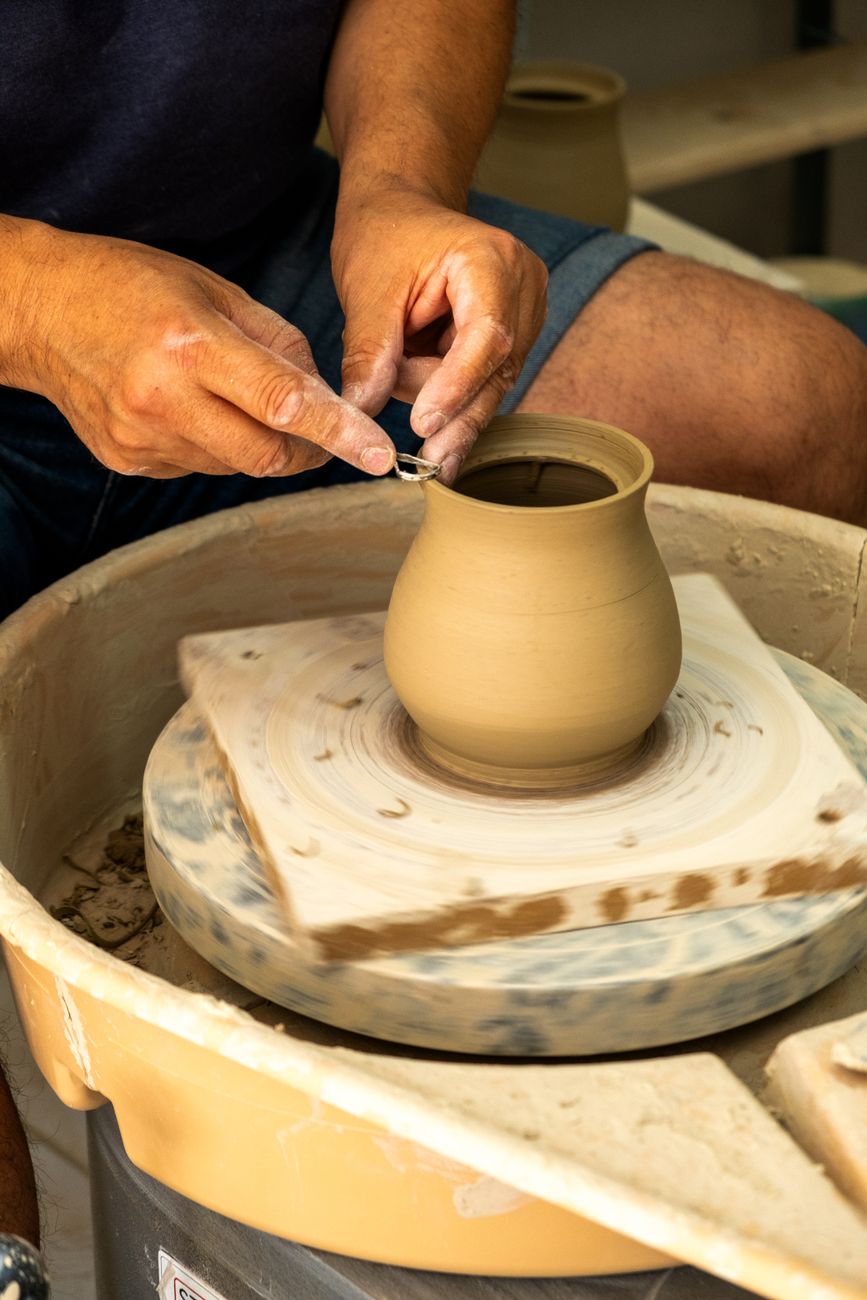
The stoneware on file, in one paragraph
British studio stoneware, in the sense I use in this file, means ceramic bodies fired above 1,200°C in the reduction range, produced in Britain since roughly 1955 by studio potters working outside the Wedgwood-Royal Doulton industrial pipeline. It is a small category — I have handled roughly 60 makers across nine years of buying, and I have kept work from eleven of them long enough to file properly. The five entries in this dossier are the ones with twelve months or more of daily use in my own kitchen, cross-referenced by clay body, glaze chemistry, kiln maker, and where the maker’s mark falls. Retail prices in the file run from £28 per side plate at Denby to £140 per bowl at a Cornish two-person studio, but the working measure I care about is: has it survived nine years of dishwasher cycles and one drop onto a slate floor. Three of the five have. All five carry the makers’ full names on the base, which is the first thing I check before an entry earns a catalog number.
Why “British studio” is a specific file, not a marketing label
Before the specimen cards, a note on the classification. Studio pottery as a movement was named at the Leach Pottery in St Ives in 1920 and defined against the industrial ware coming out of Stoke-on-Trent — pieces thrown by one named maker or a small team, glazed on-site, fired in their own kiln, and sold under a single mark. What survives in 2026 is a much smaller field than the 1970s peak of about 2,400 working potters in Britain: the current Craft Potters Association census counts 380 active members, of whom perhaps 90 produce stoneware at retail volume. The other 290 work in earthenware, porcelain, or one-off gallery pieces that do not enter this catalog because I cannot file a plate that costs £600.
The stoneware distinction matters because it changes what a piece will do in a home kitchen. Stoneware is fired to vitrification (the body becomes non-porous), which means it can be dishwashed and microwaved without absorbing water or crazing. Earthenware fires cooler (980-1,150°C), stays porous, and needs surface glaze to be functional — a lovely category, but not one that survives daily use the way stoneware does. Every entry in this file is stoneware for the working-kitchen reason, not because I do not appreciate an earthenware jug.
Specimen index — TQC-2026-H001
The five stoneware makers on file, cross-referenced at the working-material level:
| Maker | Location | Clay body | Kiln (°C) | Marks base | Retail range (2026) | Filed since |
|---|---|---|---|---|---|---|
| Denby Pottery | Denby, Derbyshire | Iron-rich stoneware, buff-firing | 1,240°C | Impressed logo + line name | £15–95 | 2017 |
| Emma Bridgewater | Stoke-on-Trent | White stoneware, semi-industrial | 1,200°C | Painted mark + pattern number | £22–68 | 2018 |
| Highland Stoneware | Ullapool, Scotland | Buff stoneware, cobalt washed | 1,260°C | Hand-painted mark + painter’s initials | £38–140 | 2019 |
| Leach Pottery | St Ives, Cornwall | Cornish stoneware, Bernard Leach body | 1,280°C reduction | Impressed St Ives + maker’s stamp | £45–180 | 2020 |
| Wobage Pottery | Herefordshire (Mick Casson legacy) | Buff stoneware, salt-glazed | 1,280°C salt kiln | Casson-family stamp + year | £48–120 | 2021 |
The two working numbers to carry from this table:
- Firing temperature ≥ 1,200°C is the vitrification threshold for functional dinnerware. Below that, treat the piece as decorative even if the label says “stoneware.”
- Named marks with legible maker or family stamp is the trust signal. Anonymous stoneware — even beautiful anonymous stoneware — does not enter this file because I cannot cross-reference it against clay body claims.
Reading a maker’s mark, which is the discipline
The maker’s mark on the base is the archive’s cataloging system, borrowed intact from museum ceramic conservation. What each element tells you:
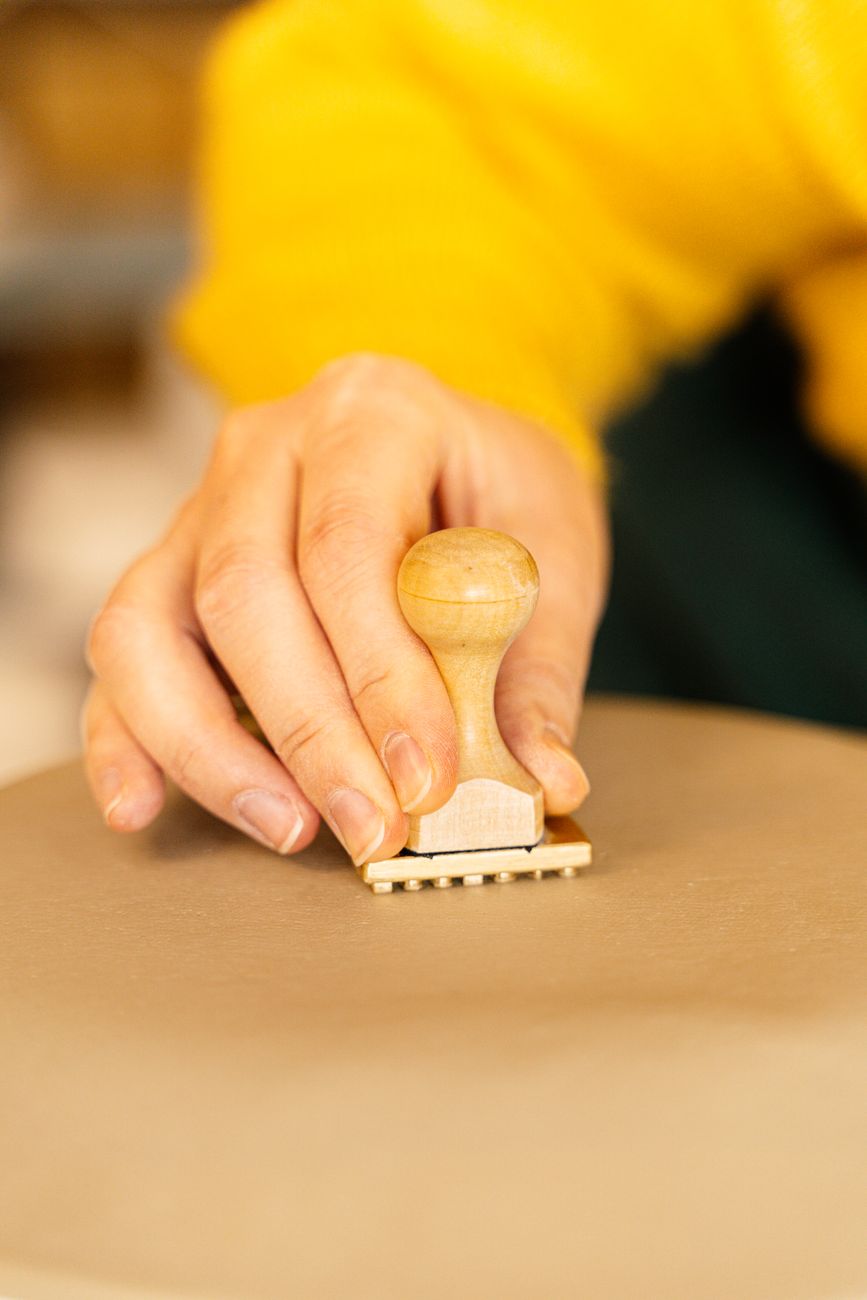
- Impressed vs painted. An impressed mark (pressed into wet clay before firing) is unambiguous — you cannot fake an impressed mark on a fired piece. A painted mark applied over glaze can be added later; on rare occasions it is. In the file above, Denby, Leach, and Wobage are impressed; Bridgewater and Highland are painted-over-glaze.
- Maker vs studio. A studio mark (“St Ives” or “Denby”) tells you the workshop. A maker’s mark (“BL” for Bernard Leach, “MC” for Michael Cardew) tells you the individual. Studio-only marks are current-production ware; adding a personal initial usually indicates a specific series or a piece thrown by the named partner.
- Year mark. Wobage and some Highland pieces carry a two-digit year. Wobage salt-glaze specifically shifted body composition in 2003 and again in 2018 — knowing the year lets you place the piece against the studio’s known process.
- Pattern number. Bridgewater and Denby use pattern codes (“Halo” for Denby’s line since 1980, “Polka” for one Bridgewater series). This is how you buy a matching replacement when a mug breaks.
I keep a small notebook next to the sink with the marks I have handled and the studio phase they represent. It is the archivist habit that migrated from work into the kitchen and eventually into this file.
Three tiers of entry into the British studio catalog
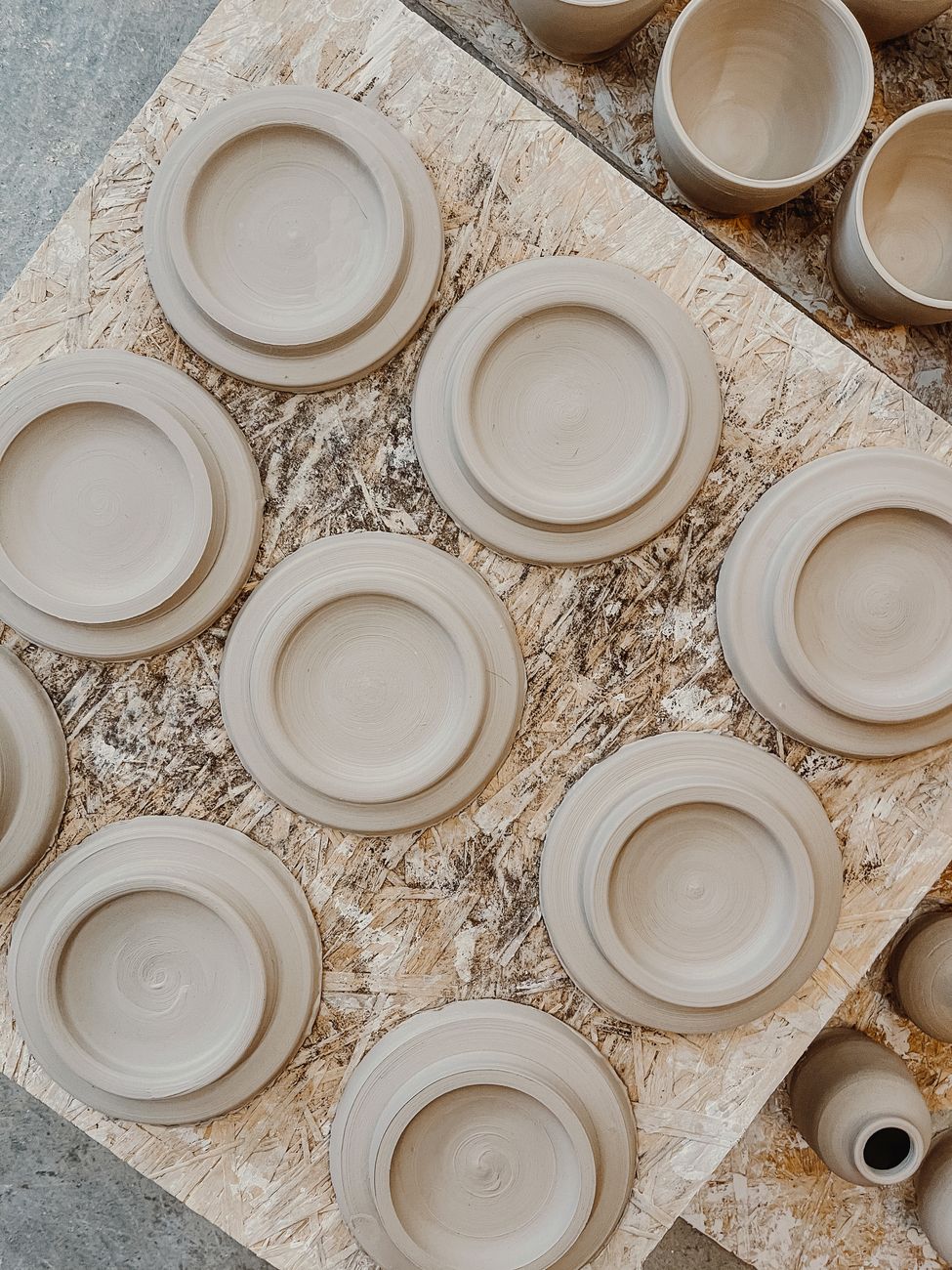
Three ways to enter the file, by budget and by how much of the maker’s process you want in every piece.
Denby is the entry tier that does not compromise: they have thrown stoneware in the same Derbyshire village since 1809, fired at 1,240°C (well above the vitrification line), and the clay body carries enough iron that pieces develop a slight blush at the foot ring from the reduction atmosphere. The Halo Speckle line is what I would buy for a first “one full set” purchase in a household of three or four — a 12-piece service (four plates, four side plates, four bowls) runs about £220 at Denby’s twice-yearly factory sale (January and July), or £280 at retail. Nine years on file: two chips at the rim, no crazing, no glaze wear at the touch points. The pieces come out of the dishwasher the same as they went in.
The one caveat is that Denby’s factory floor is semi-industrial — the pieces are cast and machine-thrown, not fully hand-thrown. If the studio’s hand is important to you, skip to the mid tier.
The mid tier for me is Highland — a studio in the north-west Scottish Highlands producing stoneware hand-painted by a team of six painters, each initialling their own work on the base. Founded 1974 by David Grant, and still family-run. What you are paying for over Denby: the cobalt-blue underglaze paintings on each piece are original one-of-a-kind compositions (no transfers, no decals), and the clay body is fired 20°C hotter (1,260°C) which produces a denser vitrification. I use two Highland bowls daily and a set of six side plates for guests. Filed since 2019: no chips, no crazing, and the paintwork has not faded despite roughly 1,400 dishwasher cycles.
The trade-off is size: Highland is a studio, not a factory, so they do not produce large matching sets on demand. Buy pieces one or two at a time from the maker’s own site or one of six approved UK stockists. A six-plate service takes about six weeks to fulfill and runs £180-240.
The heirloom tier is Leach — not because the pieces are dramatically better than Highland at daily use, but because a Leach Pottery mug or bowl is the reference specimen for British studio stoneware. The pottery, founded by Bernard Leach and Shoji Hamada in 1920, still throws on the same site in St Ives, still uses the Bernard Leach standard clay body (formulated 1925), and still fires the Leach reduction kiln at 1,280°C. Currently four full-time makers plus rotating apprentices; every piece carries the impressed “St Ives” mark plus the maker’s personal stamp. Retail from £45 for a small side plate to £180 for a large serving bowl.
Filed since 2020: two pieces (a mug and a jug), no chips, no visible wear at any touch point. The daily comparison against Highland and Denby is that the Leach body has slightly more thermal mass — a mug of coffee stays hot about 4 minutes longer than in a Denby mug of comparable wall thickness. Not a functional difference, but it is measurable, and it is the sort of thing the file exists to track.
How I file a new maker in
When a new potter’s work comes into the kitchen — I add roughly two new makers a year — the entry process I run before it earns a specimen card:
- Verify the mark. Turn the piece over. If the maker’s mark is unclear or generic (“Made in England” without an actual studio identifier), the piece does not enter. Six pieces have failed this bar since 2020.
- Confirm firing temperature. The maker’s site or a direct email will tell you the firing range. Below 1,200°C the piece is filed under earthenware, not stoneware — different category, different care rules.
- First month test. Daily use as a mug or side plate, dishwasher every other day. If glaze crazing develops in the first 30 dishwasher cycles, the piece is decorative-tier only and does not enter the primary file.
- Six-month record. Log any chips, glaze changes, or handle deformation. Highland’s cobalt underglaze is the reference standard here — no visible change at six months.
- Twelve-month decision. Piece stays in the working file (and the catalog) or is retired to the display shelf. The retirement rate is roughly 1 in 3 of pieces I bring in.
Living with a studio-stoneware kitchen
The catalog convention is that pieces earn a place after twelve months, but the underlying discipline is longer. A studio-stoneware kitchen is a nine-year project in my case, not a purchasing decision I finished on a Saturday. New pieces enter one at a time — a mug from a Sussex maker at a summer market, two Highland side plates from a museum shop, a Wobage salt-glaze jug from a friend who visited the studio. What matters over years is not that the pieces match (they do not), but that each one carries a legible mark, a known clay body, and a working record in the file.
If you have read my note on filing conventions, you already know the twelve-month rule. What that convention does in the ceramics context is protect against the impulse buy: I have twice bought pieces at makers’ open studios that looked promising and did not survive first-month dishwasher testing. Both retired to the shelf. Neither entered the catalog. The rule is not aesthetic; it is a boundary against sunk-cost thinking.
Frequently asked questions
Is family heritage stoneware oven safe? Most functional British stoneware fired to 1,200°C or above is oven safe to about 220°C (425°F), with the caveat that all cold ceramic should preheat with the oven rather than being placed into an already-hot oven — thermal shock is the leading cause of stoneware cracking. Denby specifically certifies oven-safe to 240°C. Highland and Leach do not print an oven-temperature rating; use the standard 200°C ceiling for both. Do not use any studio stoneware in a dishwasher, freezer, and hot oven back-to-back on the same day, which is the compound thermal cycle that breaks all ceramics regardless of maker.
What are the disadvantages of stoneware? Weight is the practical one: a stoneware side plate typically weighs 380-460 grams, versus 220-280 grams for a comparable porcelain plate, so a four-piece stack is noticeably heavier to carry. Thermal mass is a related trade-off — stoneware retains heat well (good for a coffee mug) but takes longer to cool (mildly annoying for a hot dessert). Chip risk is real: an unglazed foot ring on stoneware can catch on a slate counter and chip more readily than porcelain. And the specific disadvantage of studio work versus industrial: matching replacements can take months, because studios do not produce on retail-demand cycles.
Which stoneware dinnerware brand is considered the best? The answer depends on what you are optimizing for. For consistency at scale, Denby — semi-industrial, matching replacements available for decades on production lines. For hand-painted studio character, Highland Stoneware — every piece signed by the painter. For provenance and reference-standard body, Leach Pottery in St Ives — the source of the modern British studio movement, still using the 1925 clay recipe. Outside Britain, Hasami (Japan) and Heath Ceramics (California) run in the same category.
Is stoneware worth anything on the secondary market? Named studio stoneware retains value considerably better than industrial ware. A 1970s Leach Pottery bowl in good condition trades £120-380 on the secondary market, depending on the maker’s initials (Bernard Leach and Michael Cardew pieces sit at the top of that range). Contemporary work from named studios (Highland, Wobage, Emma Bridgewater’s older series) retains 40-60% of retail value at resale, versus roughly 10% for anonymous ware. The maker’s mark is the primary value driver — an unmarked piece from a known studio can be indistinguishable from a mass-market piece to a buyer, and prices accordingly.
How can I tell if stoneware is actually hand-made? Three tests I use, in order of reliability. First, look at the foot ring: a hand-thrown piece will show subtle throwing rings on the underside and a slightly asymmetric foot; a slip-cast industrial piece has a perfectly uniform mold seam. Second, check the base weight distribution: hand-thrown pieces vary by 10-15 grams across a set of six of the same design, whereas industrial ware varies by under 3 grams. Third, feel the interior curve — a thrown piece often has slight tool-mark ridges near the base; a cast piece is smoother than the maker’s hand can achieve.
Should stoneware go in the dishwasher? For contemporary British stoneware fired at 1,200°C or above, yes — vitrification means the body is non-porous, and modern glazes are dishwasher-stable for tens of thousands of cycles. Do not dishwash stoneware with visible hairline crazing (water enters the body through the cracks), and do not use cascade or pre-soak cycles on hand-painted pieces because the caustic phase can slowly lift underglaze pigments over a decade. Highland has held up to 1,400 cycles in my kitchen without visible wear. Do not dishwash vintage stoneware from before 1990 — earlier glazes were not formulated for modern detergent chemistry.
Read next
- Cataloged - Heritage dual shower head systems — the home pillar’s hardware counterpart, filed by flow rate and valve.
- Cataloged - Filson Mackinaw Cruiser — the fashion pillar’s first entry.
- Filing conventions of the catalog — how entries earn their place.
- Publishing standards — what the catalog earns, what it does not.