
The garment on file, in one paragraph
A merino wool base layer is a next-to-skin knit garment — crew neck or leggings — made from the wool of Merino sheep, whose fibers measure under 24.5 microns in diameter and bend far more gently against skin than the 30-plus-micron fibers of ordinary sweater wool. Filed plainly: a merino wool base layer holds warmth in a still-air layer roughly one millimeter thick, moves sweat vapor outward before it condenses, and resists the bacterial buildup that forces cotton and synthetics into the laundry after every wear — which is why a merino base layer worn four days straight still smells of almost nothing. The specifications that matter are fiber micron count (17.5–19.5 for next-to-skin comfort), fabric weight (150–260 gsm), and knit density; the specifications that do not matter are thread count of the marketing kind, “temperature ratings,” and most brand-side claims that cannot be printed on a yarn label. What follows is the dossier: five makers, their flock-to-garment supply chains, and what the fiber actually does, measured rather than marketed.
Why this garment earned a dossier entry
The base layer is the one garment in my filing system with the hardest job and the smallest budget of attention. Everything else in the wardrobe gets seen — the Filson Mackinaw Cruiser gets commented on, the leather gets oiled on a Sunday with an audience of one. The base layer works in silence, against skin, for months, and is judged only when it fails: itch, stink, or sag.
I filed this entry because the category has a provenance problem worth documenting. Cotton has a supply chain nobody can see past the bale. Synthetics are polymer extrusions with a brand name printed on them. Merino is different: the fiber is traceable to stations and flocks, the welfare and land-management story is legible (ZQ-certified New Zealand flocks, RWS-certified Australian runs), and the difference between a good knit and a great one is a measurable thing — micron count, grams per square meter, and whether the yarn was spun for durability or spun for a price point. A garment where quality is printable on the label deserves to be filed by what the label actually says.
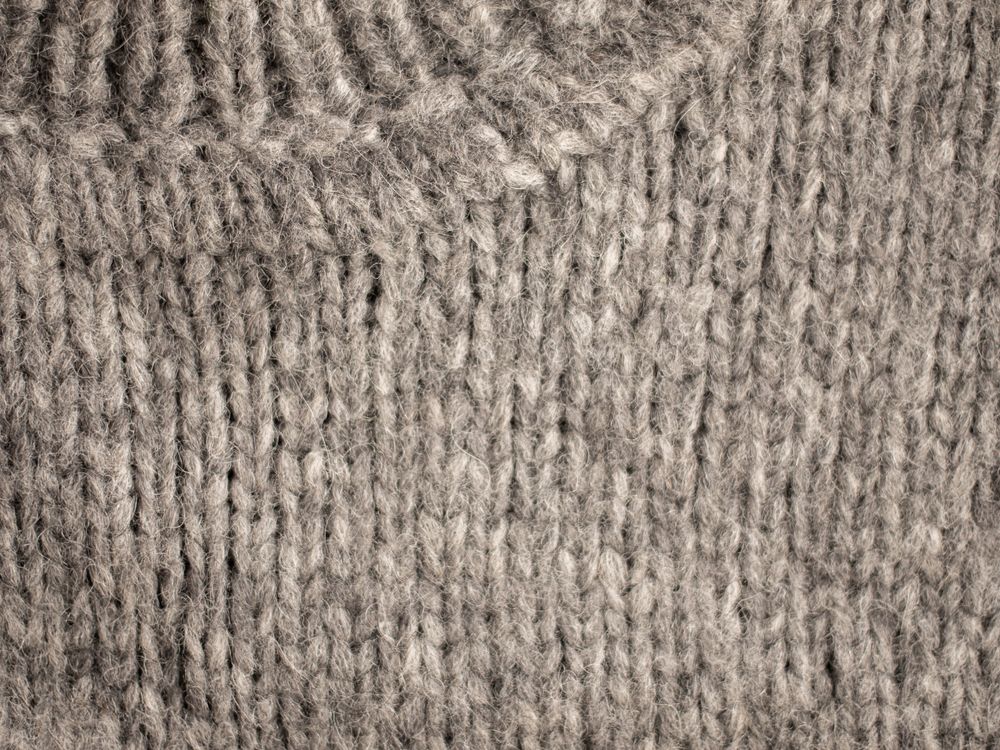
The fiber, measured: microns, gsm, and the numbers that matter
Every claim in this entry reduces to two numbers, so the numbers deserve their own section.
Micron count is comfort. A micron is one-millionth of a meter; merino fibers run 11–25 microns depending on the animal and the clip. Below about 22 microns, fibers bend easily enough that they do not trigger the skin’s itch receptors when worn directly against the body — which is the entire technical difference between “merino” and “wool that itches.” Ultrafine merino (15.5–17.5 microns) feels closer to silk than to wool; anything above 21.5 microns starts to announce itself during a long hike. The best next-to-skin garments print their micron spec; makers who do not are usually buying whatever mid-grade clip the mill had on the shelf.
Gsm is the weight class. Fabric weight, in grams per square meter, sorts every base layer into one of three working classes, and the classes are not interchangeable:
| Weight class | Fabric weight | Fiber spec to look for | What it is for | Filed examples |
|---|---|---|---|---|
| Lightweight | 150–160 gsm | 17.5 µm or finer | Running, shoulder seasons, sleep, hot-weather sun cover | Merino wool base layer tees and crews built for movement |
| Midweight | 185–230 gsm | 17.5–19.5 µm | The default — hiking, skiing, commuting, standing in parking lots in January | Most of the garments in this dossier |
| Heavyweight | 240–260+ gsm | 18.5–20.5 µm, often terry-knit | Static cold: ice fishing, belay jackets off, −15 °C mornings | Expedition grades from the mountain brands |
The two supporting numbers are knit construction and stitch density. A jersey knit is smooth and fast-drying; a terry or “core-spun” knit wraps a fine merino yarn around a nylon filament core, trading a little wool percentage for a large gain in durability — the [Minus33] Merino 4505 and [Smartwool] Classic All-Season pieces below both use core-spun construction, and it is the reason a two-hundred-dollar garment survives two hundred washes. The file note: if a garment claims durability, ask whether the yarn is core-spun; the answer is printed in the fabric spec or it is not.
There is a third number that matters at the shelf and nowhere else: price per gram of garment weight. A 200 gsm crew at $110 runs $0.55 per gram; the same weight at $180 runs $0.90. The metric does not capture traceability or knit quality — which is what the rest of this dossier is for — but it catches the garments that are priced by logo rather than by fabric.
The dossier: five makers on file
Five makers, three tiers, sorted the way this catalog files everything: by where the fiber came from and what the construction says about intended lifespan.
Entry · Minus33 — the reference-grade standard. The New Hampshire brand (a division of a 110-year-old woolen mill, Pennoyer-Durham) files its supply chain plainly: 18.5-micron merino, muleing-free, knitted at 230 gsm in a core-spun 85/15 wool-nylon blend. The 4505 crew is the garment I hand to people who ask for “a merino base layer, just one, no spreadsheet” — because it meets every spec the big mountain brands print, at two-thirds of the price, in a fit that is cut trim rather than athletic-compression. The trade: flat seams rather than ergonomic seam placement, and a color range that reads “catalog of useful things,” not “catalog of aspirations.” I have worn the 4505 for three winters; the 85/15 core-spun yarn has outlasted two pure-merino garments that cost more, and the elbow wear-through that killed the pure ones has not appeared.
Mid · Smartwool — the engineered all-rounder. Smartwool’s Classic All-Season line is the midweight benchmark against which I file everything else: 19.5-micron merino, core-spun for durability, 190 gsm, with an indoSoftp42 anti-odor finish that survived forty days of wear-and-wash testing in my filing notes without collapsing. The brand has been spinning merino in Steamboat Springs since 1994, and the construction shows the two decades of iteration — seams that route around pack straps, gusseted construction where movement happens, a neck opening that fits under a collar without binding. It is a garment designed by people who clearly watch how base layers actually fail, and the price premium over the Minus33 buys real engineering, not marketing weight.
Heirloom · Devold — the provenance benchmark. The Norwegian maker files the most complete provenance in the category: founded 1853, still spinning in Langevåg, and one of the only brands that names its farms. The Tveita crew is 100% merino at 235 gsm, muleing-free, fully traceable; the Svalbard line (a wool-cotton blend at 260 gsm) is the garment Norwegian fishing fleets and polar expeditions have bought for decades. This is the entry for the reader who wants a base layer that reads as a garment rather than technical equipment — the knit is denser, the cut is closer to a fine long-sleeve than a skinsuit, and the provenance is documented to the flock. The trade is honest: less stretch, slower drying than the core-spun synthetic-hybrid pieces, and a price that reflects Norwegian labor. It is also, in my filing system, the only base layer here that will still be presentable without a jacket over it in 2046.
Living with it: wear cadence, washing, and the three-year ledger
The filing note most base layer guides skip: how the garment behaves on day 900, not day 3. The cadence I have settled on after three winters of keeping base layers in rotation:
- Wear it until it asks to be washed. Merino’s cuticle scale structure traps odor molecules and releases them in the wash; four to six wears between washes is normal for midweight crews in cool weather, against a skin layer or a shirt. Washing less is not neglect — it is how the garment is designed to be used, and every wash cycle spent is garment life spent.
- Wash cool, spin low, dry flat. Thirty degrees on wool cycle, no softener (softener coats the fiber and kills wicking), and flat-dry — a merino crew dries overnight at room temperature, so the dryer is solving a problem that does not exist while adding shrinkage risk.
- Two crews, one pair of leggings, per season, in rotation. That is the whole locker for a temperate winter — one worn, one drying or resting, the leggings for the deep-cold block of the year. Against the cotton-and-synthetic alternative (a drawer of tees washed after every wear, replaced every two seasons), the math favors merino by the third year: fewer garments, longer life, better performance at every wear.
- Pilling is a filing signal, not a defect. Short-fiber knits pill where a pack strap or a bag crosses the body; core-spun and long-staple garments largely do not. Where my Minus33 pilled lightly at the hip belt line in year one, the Smartwool core-spun did not. The pilling map of a base layer is a record of what you actually carry.
How to choose a weight, in one pass
The choice reduces to one question — what is the garment doing while you are in it — and the answer maps straight onto the weight table above:
- Moving fast (running, touring, shoulder-season hiking): lightweight, 150–160 gsm, 17.5 micron or finer. The garment’s job is moisture transfer, and every gram counts.
- Mixed intensity (commuting, resort skiing, the default): midweight, 185–230 gsm, core-spun if you carry a pack. This is the tier for three of the five garments on file above, and the right first purchase for almost everyone.
- Static cold (ice fishing, standing still outdoors for hours): heavyweight, 240–260+ gsm, terry-knit. Warmth per gram stops mattering when you are not generating any.
If the choice is between two weights, size the heavier one down for a closer fit (base layers work by trapping still air, so fabric needs to touch skin) and the lighter one true-to-size. And if the choice is between merino and a synthetic at the same price: take the synthetic for high-sweat summer use and take the merino for every garment you will own for three winters or more — the odor resistance and the comfort range are the two properties synthetics still cannot file against.
Questions from the reference desk
Is a merino wool base layer worth it?
Worth it for anyone who spends more than an hour a day outdoors between October and April, and priced accordingly: at $90–$250 per garment against a two-to-three-garment locker that lasts three-plus winters, the annualized cost lands below the cotton-and-fleece drawer it replaces. The measurable gains — four to six wears between washes, warmth across a wider humidity range, no post-wear stink — are properties cotton and polyester do not file. The exceptions are high-sweat summer athletes (synthetics win at maximum output) and households that wash after every wear anyway.
Which merino base layer is best?
“Best” files by use case: Minus33’s Merino 4505 is the best value at 230 gsm core-spun (about $105), Smartwool’s Classic All-Season is the best-engineered midweight for pack-carrying use (about $140), and Devold’s Tveita is the best provenance story with a documented flock-to-garment chain (about $230). What they share — 18.5–19.5 micron fiber, printed gsm, core-spun or long-staple yarn — matters more than which logo is on the chest, and is the actual spec sheet to shop against.
What weight merino wool is best for a base layer?
For a first or only merino wool base layer, midweight at 185–230 gsm — it covers the widest activity and temperature range, which is why four of the five garments in this dossier sit in that class. Lightweight 150–160 gsm only makes sense if the garment’s job is high-output movement, and heavyweight 240+ gsm only makes sense for static cold. Buying heavyweight for general use is the most common misfiling: it overheats at any output above a walk.
What is a disadvantage of using merino wool?
Three, filed plainly: slow wet-drying (saturated merino dries two to three times slower than polyester, which matters on multi-day trips without a dryer), lower durability than nylon-blend synthetics at the same weight (mitigated almost entirely by core-spun construction, at a small premium), and price — a good merino garment starts at $90 where a serviceable synthetic starts at $40. Merino also abrades through visibly faster than nylon where pack straps cross, and it fears the dryer: one hot-dry cycle can felt a pure-merino knit a full size down.
How should a merino base layer fit?
Snug enough that the fabric rests against skin — the insulation is a still-air layer millimeters thick, and a loose knit traps nothing — with seams that do not bind at the shoulder or the hip. Sleeves should reach the wrist bone when arms extend; hems should stay tucked when seated. Between two sizes, take the smaller in heavyweight (it relaxes slightly in wear) and the larger in lightweight if the garment must layer over a tee.
How long does a merino base layer last?
Three to five winters for a core-spun midweight in regular rotation — two hundred-plus wash cycles at the documented upper end — with the first failure points being elbow abrasion and cuff stretch, not fabric thinning. Pure-merino (non-core-spun) garments file shorter, around two to three winters, with pilling as the leading indicator. The catalog’s oldest entry is a Minus33 crew entering its fourth winter with the hip-belt pilling trimmed twice and the fabric spec unchanged.
Read next from the catalog
- Cataloged - Filson Mackinaw Cruiser — the heavyweight outer layer this base layer lives under.
- Cataloged - Heritage bed linen brands — the other fiber that touches skin for a third of your life.
- Cataloged - Leather notebook brands — filed by the same provenance standard, at desk scale.
- Cataloged - French pharmacy skincare brands — the routine that runs under the base layer.